About

Valdas Jencius is a multidisciplinary artist and writer whose practice moves between visual and literary forms — photography, painting, video art, poetry, and essays. His work traces the fragile borders between image and language, public and private space, emotion and thought. It reflects on how social and cultural realities, and the quiet architectures of everyday life, shape the human psyche.
In his recent reflections, Jencius turns to the condition of attention in an age where spectacle has displaced meaning and emotion governs the public sphere. His practice examines how perception, shaped by media and collective desire, redefines citizenship and the idea of freedom itself.
Since 2014, his visual works have been shown in galleries and cultural venues across Denmark, Oslo, Stockholm, Helsinki, Lithuania, and New York. His writings are regularly published in the Lithuanian media.
Born and raised in the port city of Klaipėda, Lithuania (1985–2012), Jencius lived in Copenhagen from 2012 to 2017, in Vilnius from 2017 to 2018, in Norway from 2018 to 2024, and since 2024 has been based in Lithuania.
I work across several disciplines — photography, painting, video art, poetry, and essay — all of them unfolding from a single curiosity about how people inhabit space, time, and one another. My background in Town and Country Planning and Landscape Architecture, completed in 2010, continues to guide my way of seeing — where structure meets emotion, and place becomes experience.
Being self-taught in art has given me a kind of freedom — to move without maps, to experiment, to follow intuition instead of method. My first poems appeared in 2007; later, they found a voice of their own in sound and video, where language began to turn into image.
When I moved to Copenhagen in 2012, I discovered what I came to call the “urban jungle” — the quiet dramas of everyday life, the architecture of emotion in the streets. Much of my writing and photography began there.
What connects all my work is the wish to understand the fragile humanity of our time, and to locate myself within it — somewhere between the visible and the invisible.


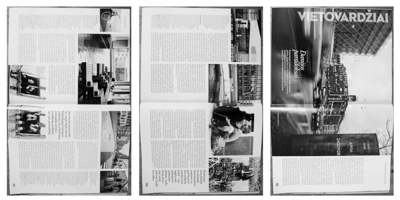


Books, catalogues, albums
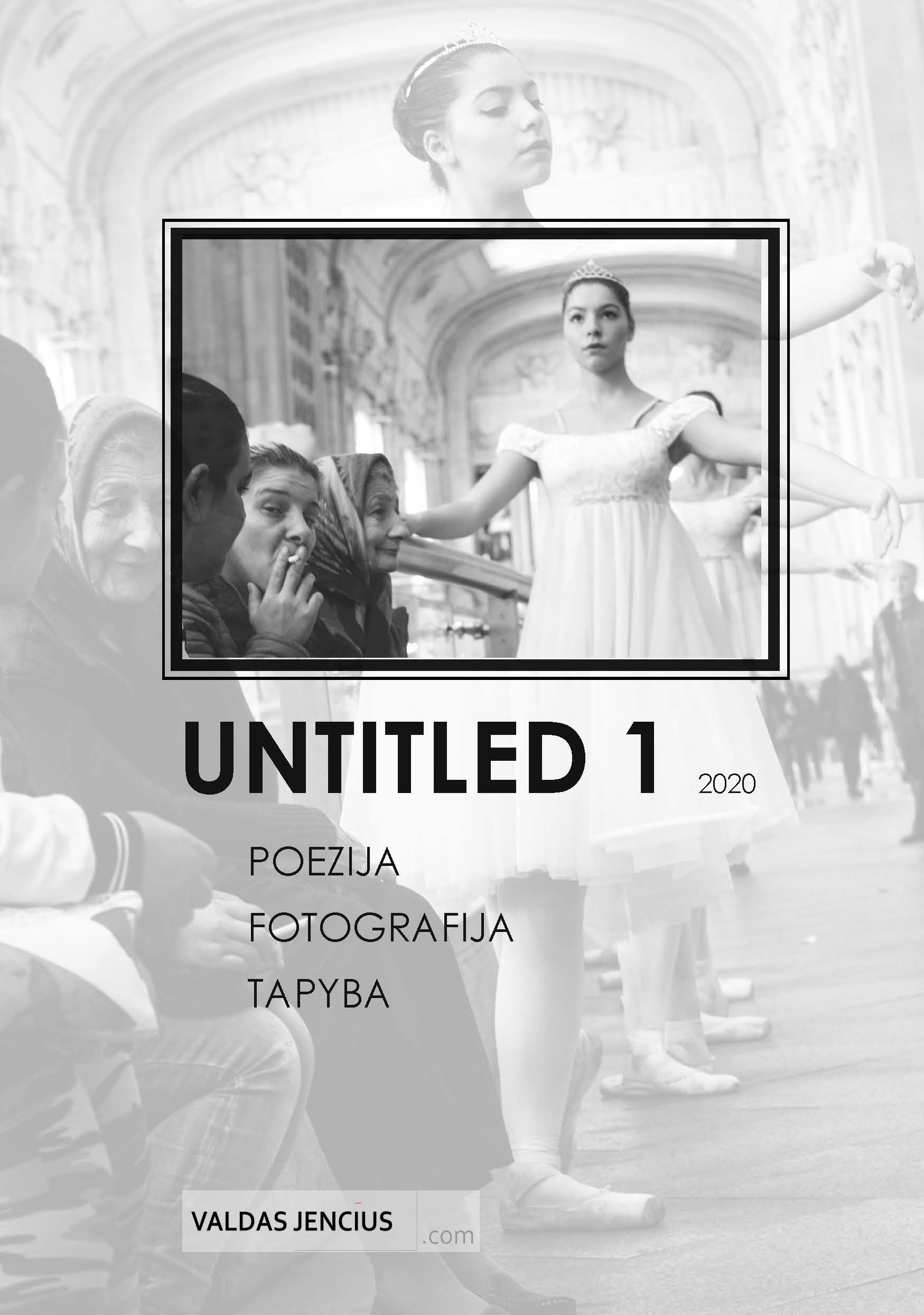


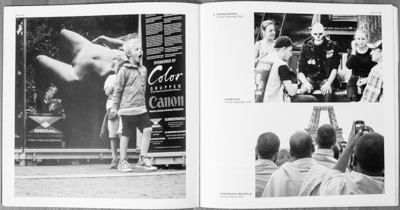
One of the essential qualities of my photography is its restraint: most of my images are in black and white. I chose to abandon color because I believe that, in many cases, it distracts from the human essence — from what remains when appearance, fashion, and surface are stripped away.
My main series have been developed in the streets of Paris, Amsterdam, Munich, Milan, Rome, Venice, Bergen, Malta, Vilnius, and other European cities — including Copenhagen, where this journey began in 2012. I am drawn to international environments not for their novelty but for the contrast they offer: through the play of similarities and differences, I can see my own place and culture more clearly.
When my camera is directed toward a person, it is also directed toward social and anthropological understanding. I try to move beyond masks — to approach the fragile, unguarded core of being. Sometimes, if I am fortunate, an image reveals what I find most absent in the contemporary world: humanism, poetry, and the unmanufactured presence of life in a time of noise, commerce, and synthetic emotion.
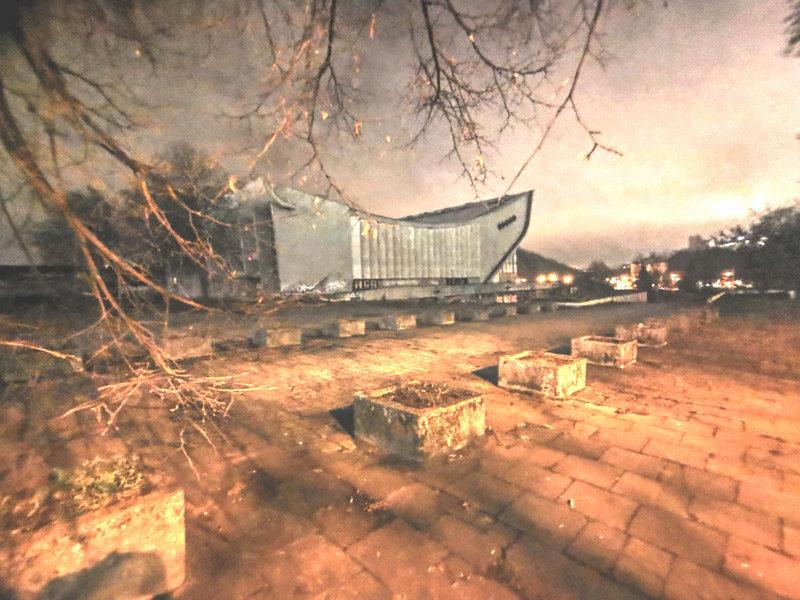
I believe that photography must hold a dual quality: to carry meaning and to remain visually compelling — only then can it acquire documentary and historical value. Alongside my human-focused work, I also create long-exposure studies of urban landscapes — cityscapes without faces, where light itself becomes a living subject.
Among the photographers who continue to inspire me are Robert Doisneau and Henri Cartier-Bresson, as well as Lithuanian masters Antanas Sutkus, Vitas Luckus, Romualdas Rakauskas, and Algimantas Kunčius. Their work, like the Impressionists before them, remains timeless not because of style, but because of their subject: us.

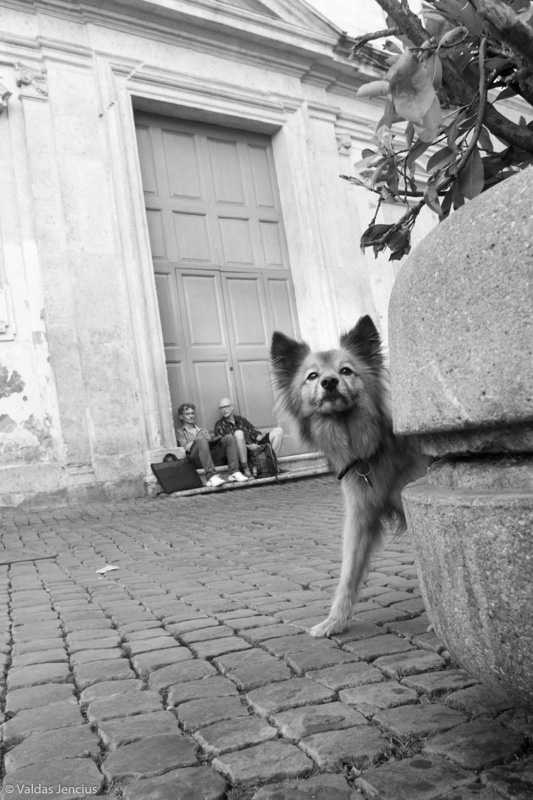
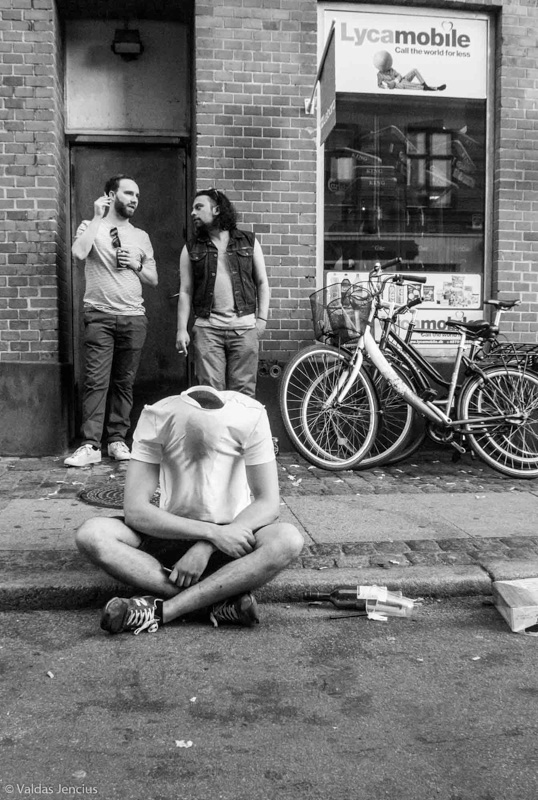
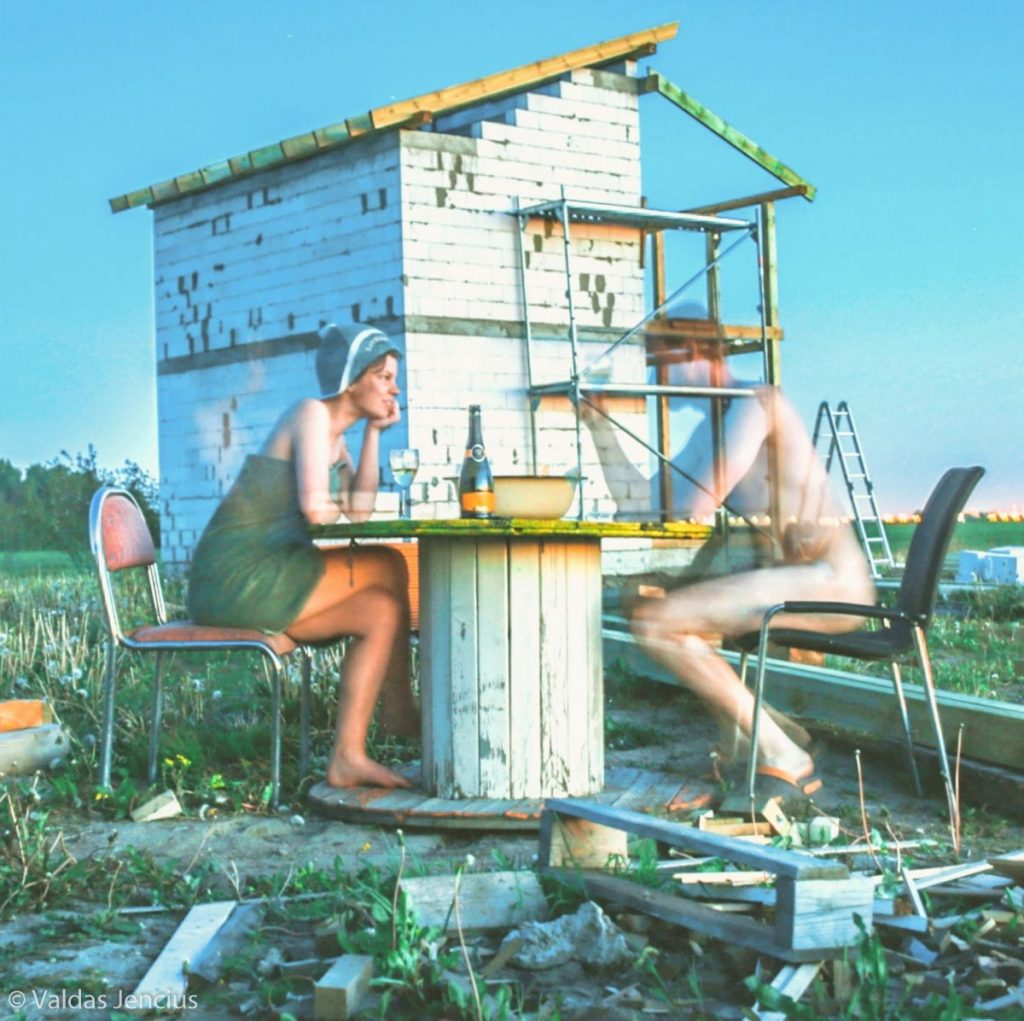
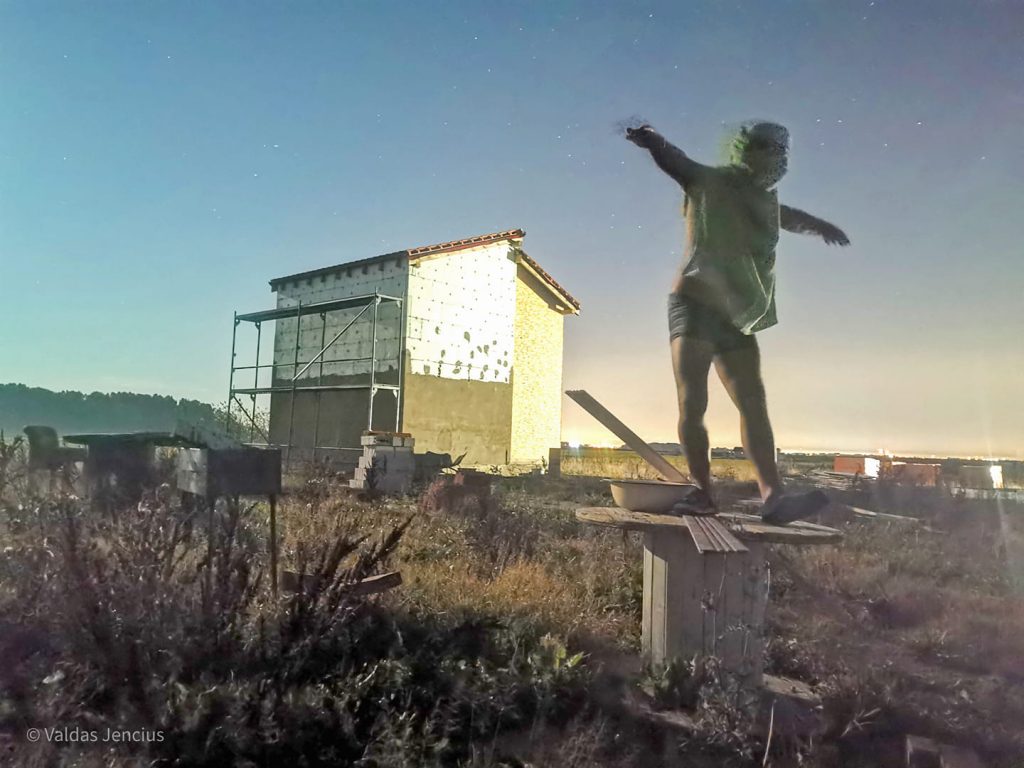
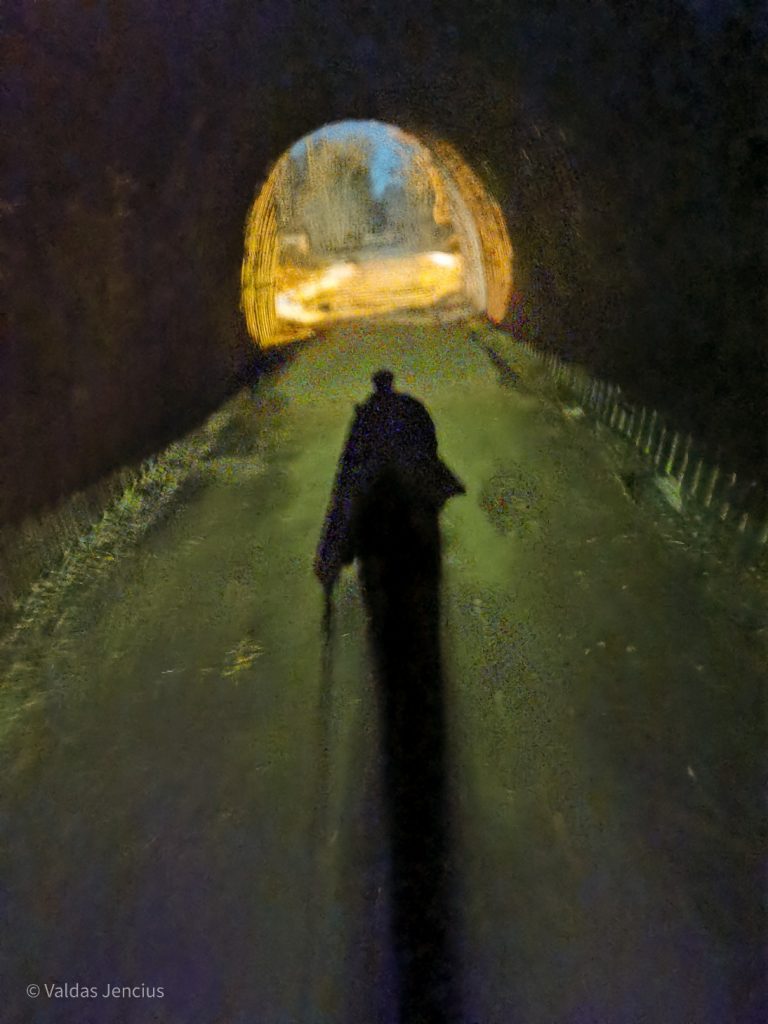
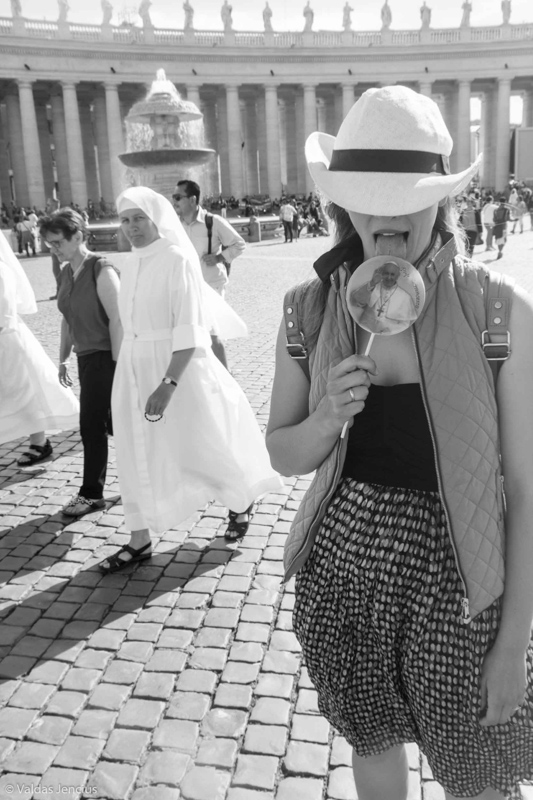


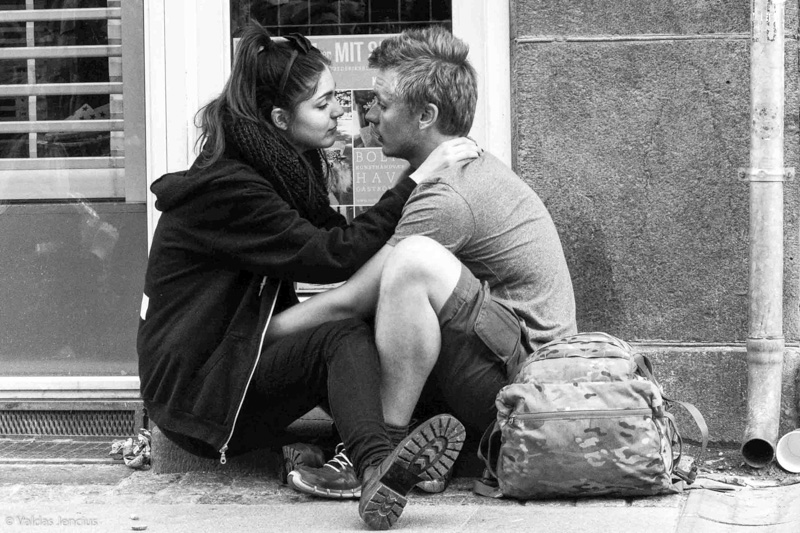
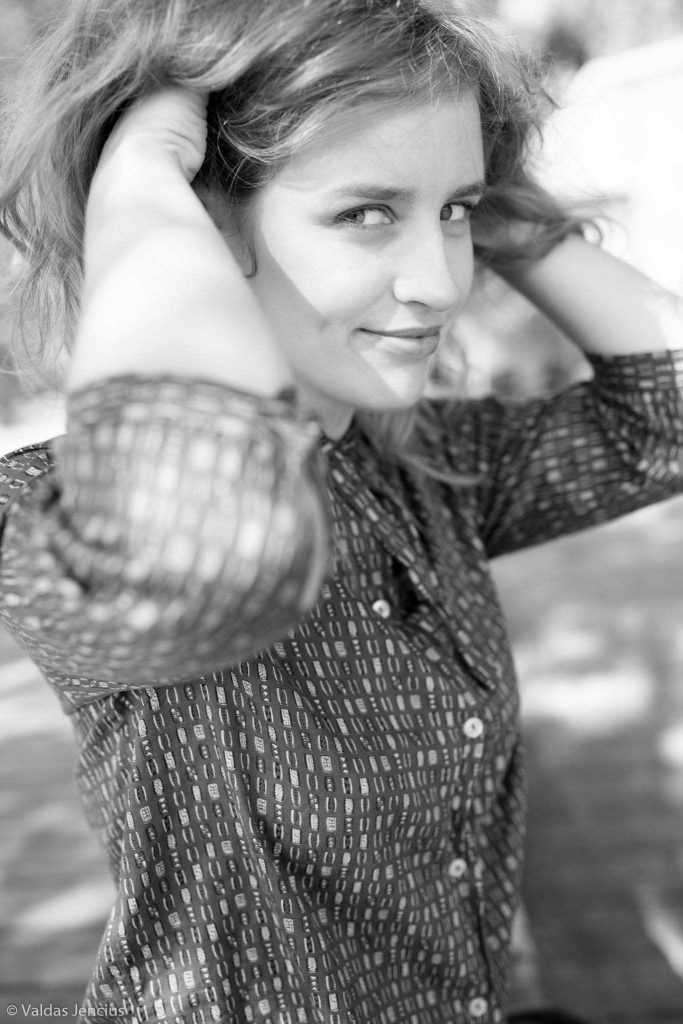

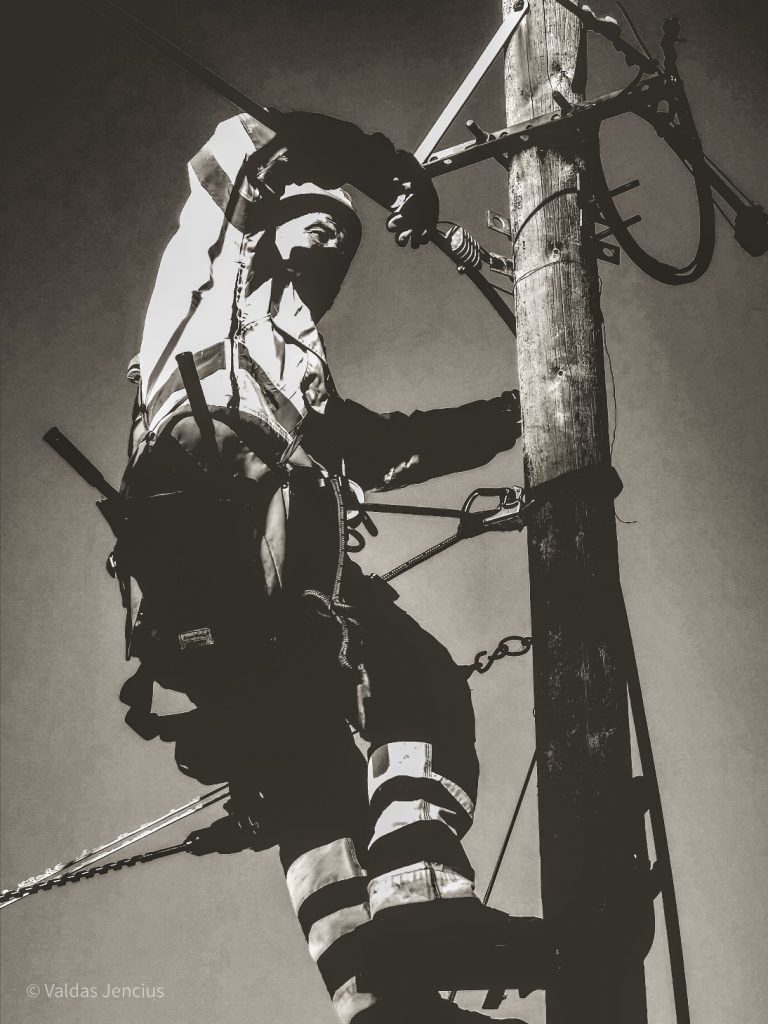
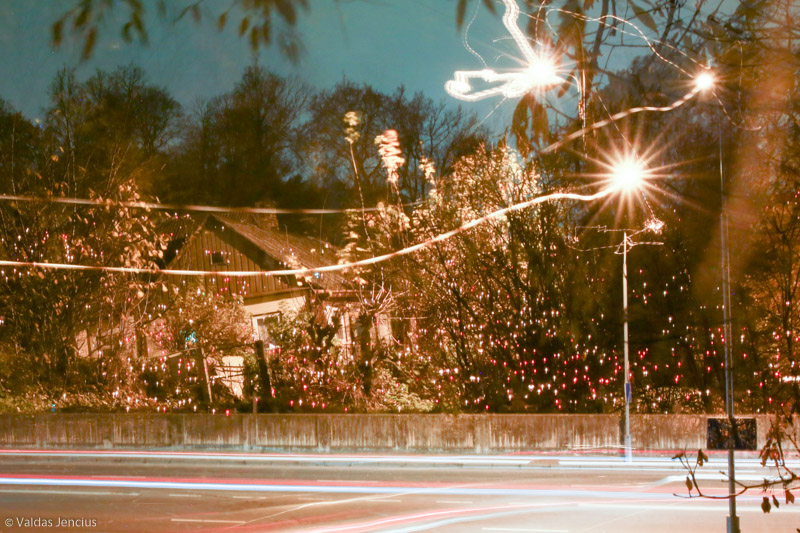



We are living beings, not unlike animals — with eyes, hearts, and instincts; capable of love, envy, tenderness, and betrayal. Our biology, and much of our psychology, remains the same. At times, I even question whether contemporary society, with its distance from poetry, empathy, and genuine humanism, is still more evolved than the natural world we once left behind.
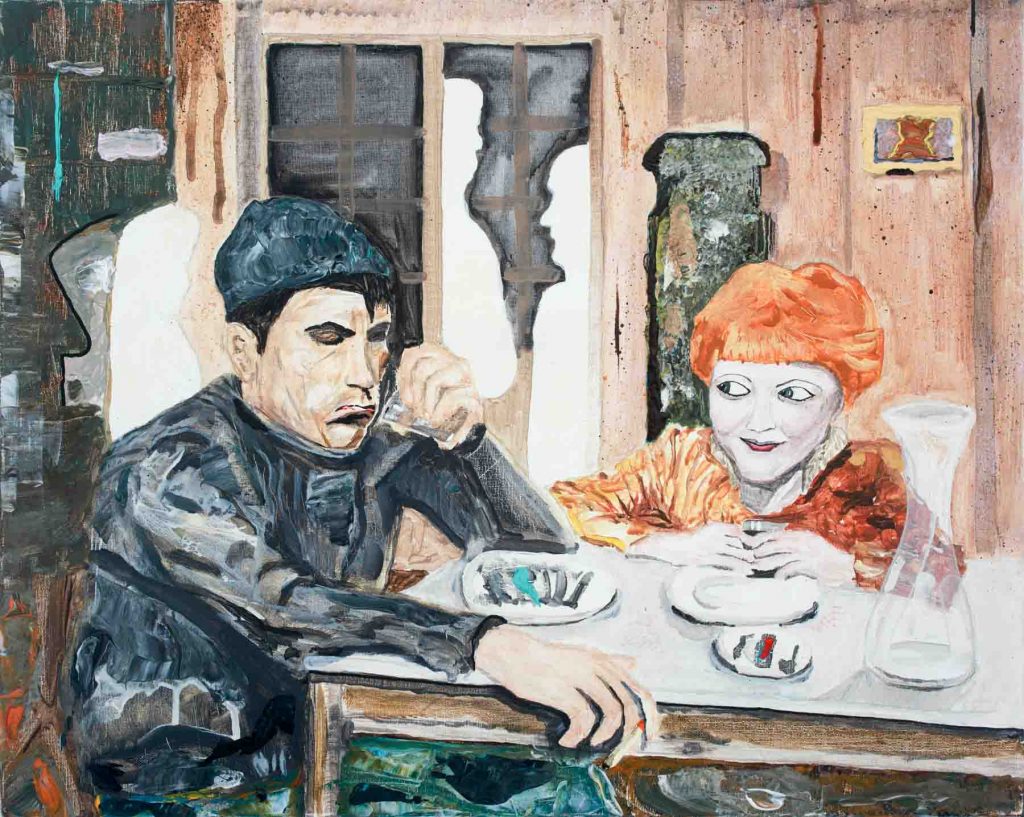
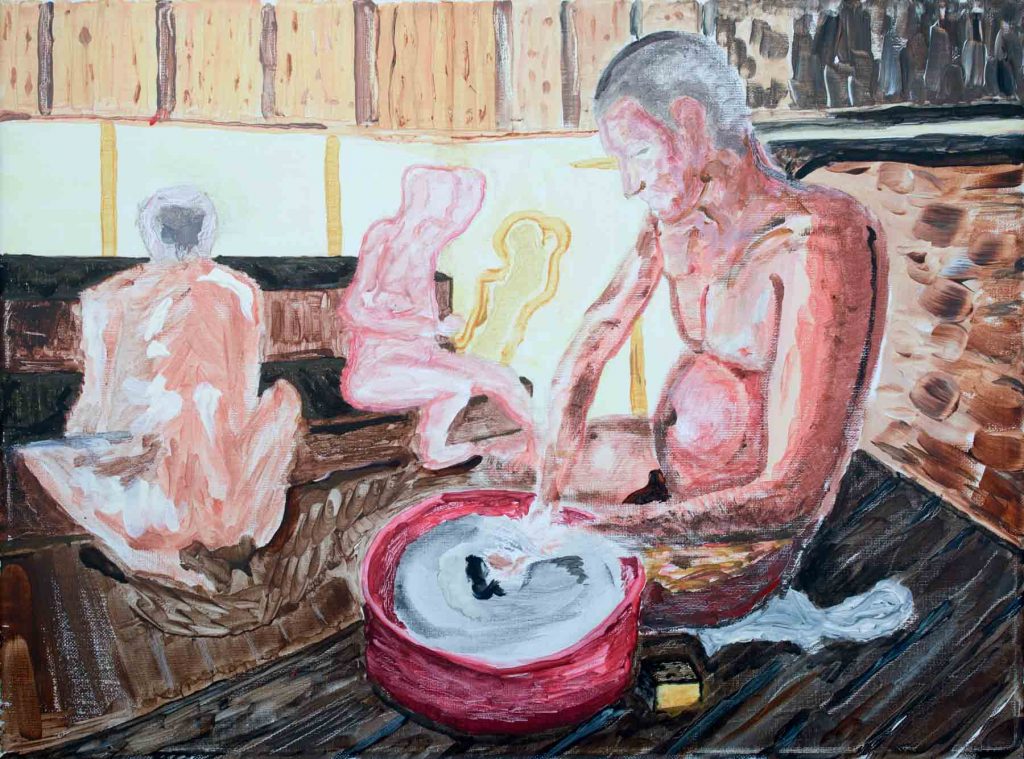
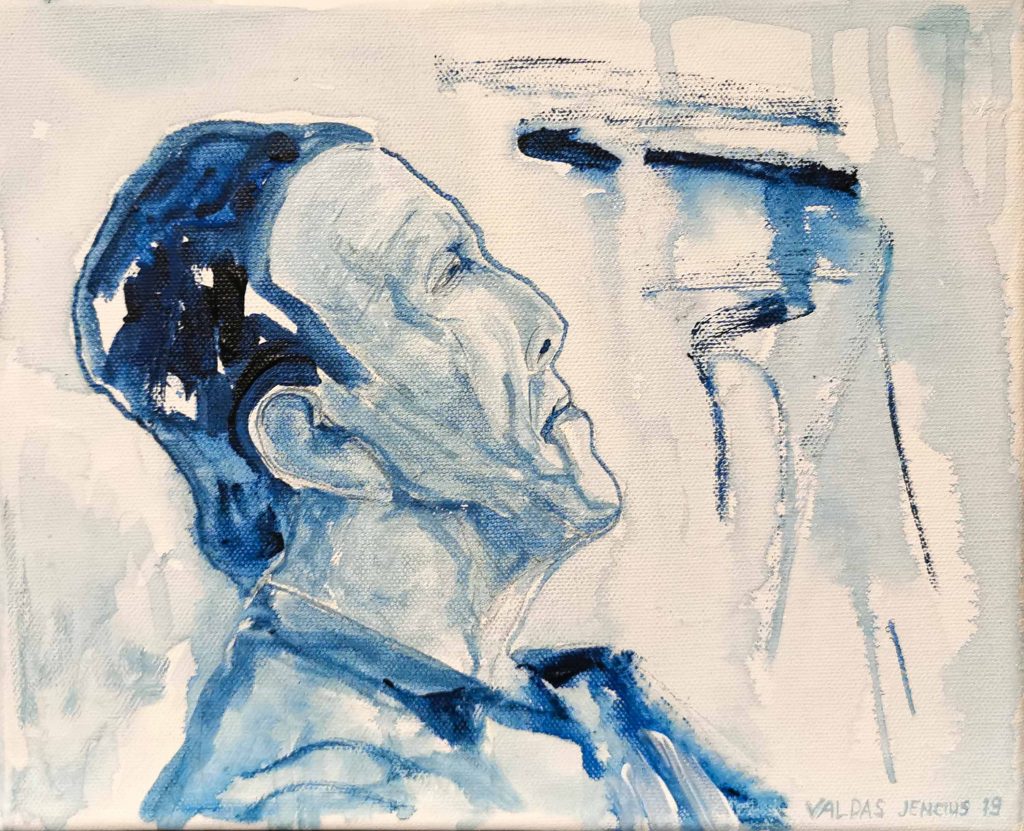
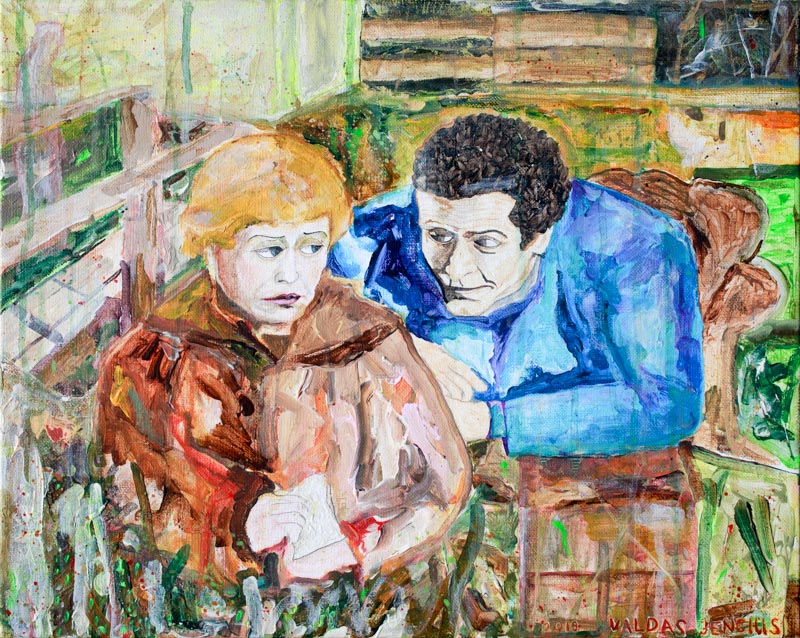
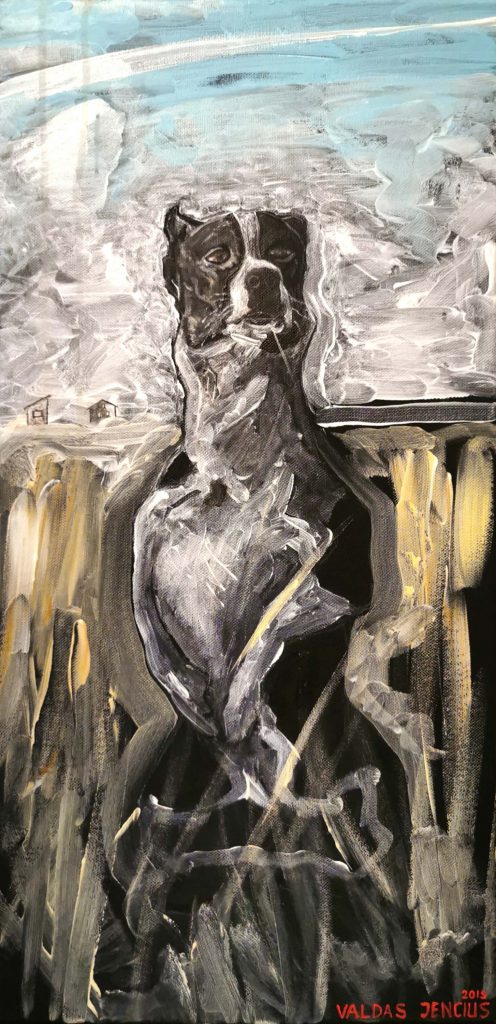
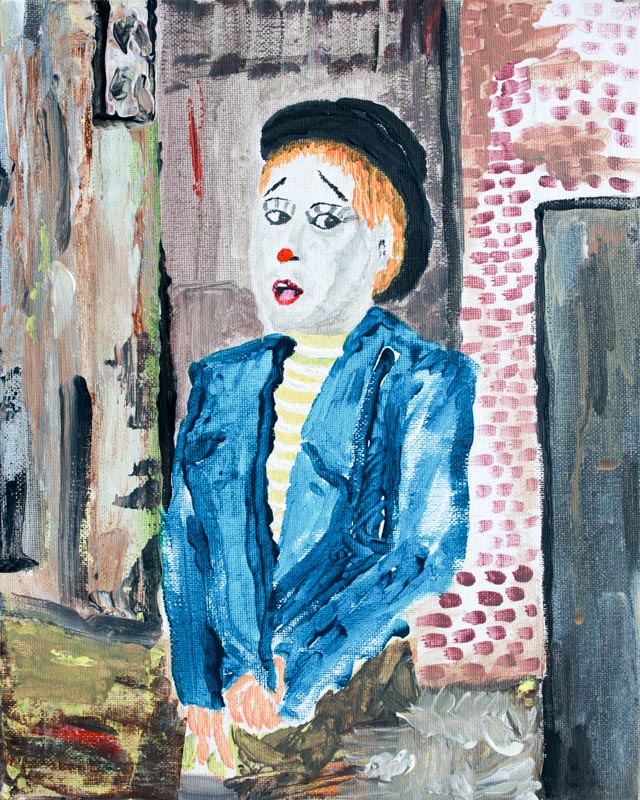
In my paintings, I try to capture the essence of human life through fleeting and often unnoticeable moments — those gestures and tensions that reveal the inner norms and distortions of our nature, shaped and burdened by contemporary culture.
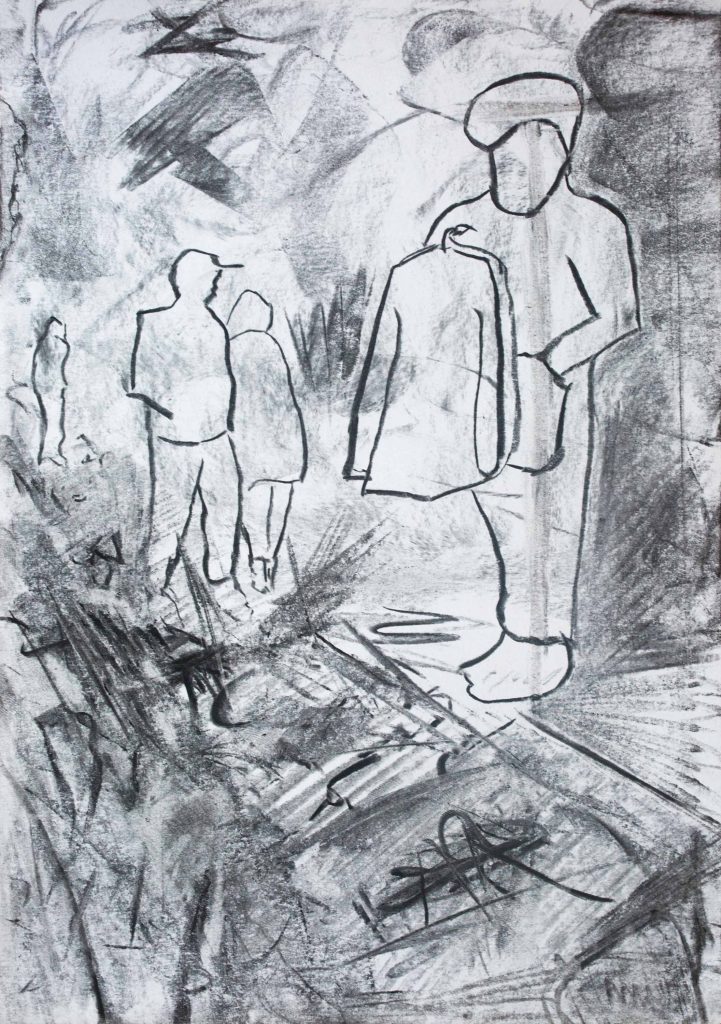
Painting, for me, extends what I explore in photography and poetry. It offers a different visual language — one that allows exaggeration, distortion, and emphasis, making visible what photography or daily perception may overlook. My subjects remain the same: people, society, and the fragile structures of modern existence.
Many of my works evolve from photographs — through sketches and drawings that are gradually transformed on canvas into paintings, abstractions, or collages. The figures often emerge from my own photographs or from fragments of mass media, cinema, and memory.
Among the painters I deeply admire are Peter Doig, David Hockney, Anselm Kiefer, Gerhard Richter, Vincent van Gogh, and two great Lithuanians — the visionary composer and painter M. K. Čiurlionis and the father of Fluxus, Jurgis Mačiūnas.



I’m not sure I would have ever turned to video art without poetry. Most of my video works are built around my own poems, spoken in my voice and layered over ambient sound. The image becomes a visual extension of language — a reinforcement of the poetic message, and at times, a poem in itself.
When I combine video and text, it is because I sense a natural parallel between the two mediums — their rhythm, silence, and ambiguity. Some of my videos, however, stand alone: without words, only the visual field and the sound of the world. Yet even these hold a poetic pulse. Their mood, tempo, and layers of meaning resist documentary realism; they move closer to the condition of poetry.
The footage comes from my surroundings and travels — fragments of daily life that range from small contemplations (a flower, a bee, a dog, feet touched by the sea) to more social imagery: a nationalist parade collaged with a conversation between an elderly couple, or a night scene from Amsterdam’s red-light district.
Each video is a puzzle of life — composed of seemingly insignificant details that, when seen closely, reveal a hidden significance. Among the artists who continue to inspire me is Jonas Mekas, whose belief that “everything is important” remains central to my own way of seeing.
My poetry is about you, us and myself.
It is about life and death.
About love and madness.
About happiness and pain.
My poetry is about sadness and will.
It can even be about Amsterdam.
Or a small Lithuanian town at the seaside.
Or show up as an ironic critic of nationalistic and homophobic habits of society.
So as you see it can be about everything.
But mainly it is not about what it is.
It’s just a state of my own heart.
And nothing about any of the great truths’.
There are too many of them…
And each of us has at least a billion.
So, just an ordinary feeling
Of an ordinary man
With his ordinary truth,
And the ordinary madness,
Of his ordinary heart.
About something
What is among us.
Around
And inside.
Anyways…
Most commonly
It is in Lithuanian
Which means that
It doesn’t matter.
But I am doing my best…
I even learned to work with google translator
And became a video artist
To make my metaphors more comprehensible to aliens.
Anyways…
(Once again).
Nowadays aliens don’t use metaphors.
Nowadays they don’t have time for them.
(They don’t have time at all).
Nowadays, you must be rapid, short, and concrete.
Sadly, my heart is silly.
It doesn’t follow modern needs.
And even more disappointing is that
It is stronger than my smart practical head.

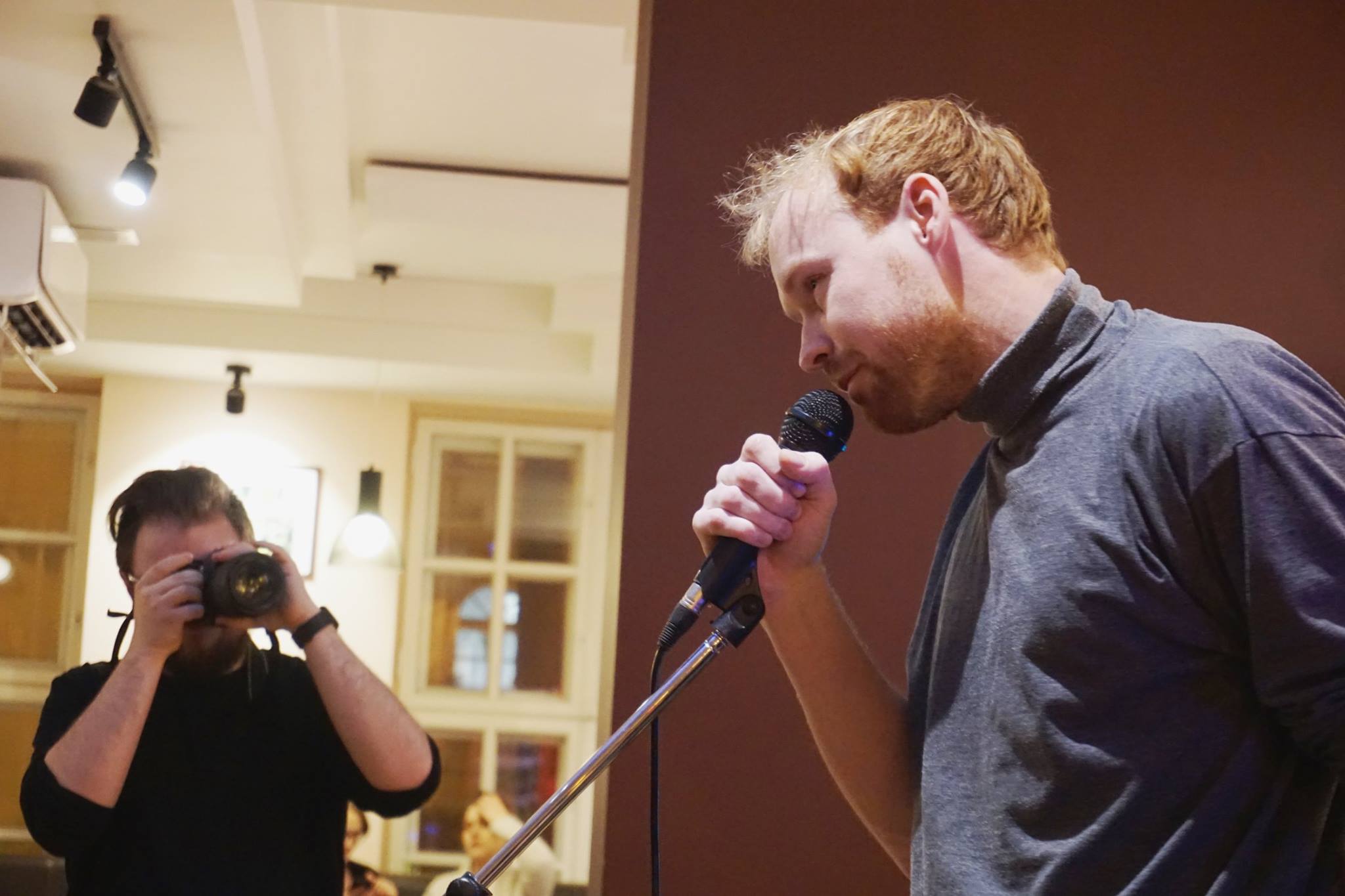

To understand the world we live in, one must learn to look deeper — beyond the noise of events, into the patterns that quietly define them. This search for understanding is what drives my writing. Every essay begins as a small investigation: collecting, comparing, and interpreting fragments until a clearer image emerges. The process is demanding, but the moment when scattered thoughts form coherence is its own reward.
My interests often move between the social, cultural, anthropological, and urban — sometimes touching on history and politics. These fields offer both structure and tension, the same opposites that animate my visual work and poetry. Writing allows me to map the world, and at the same time, to navigate within it.
Most of my texts are written in Lithuanian, though I also work in English. In both languages, I write to understand — not only the world, but the shifting architecture of my own thoughts.
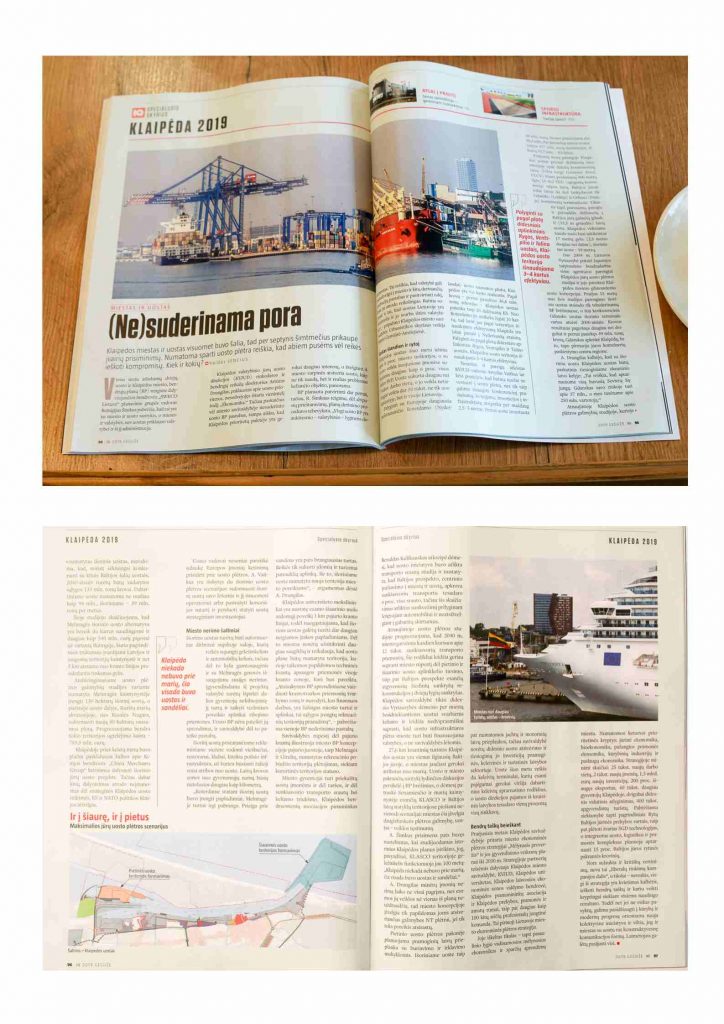


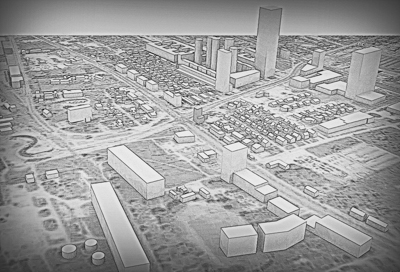
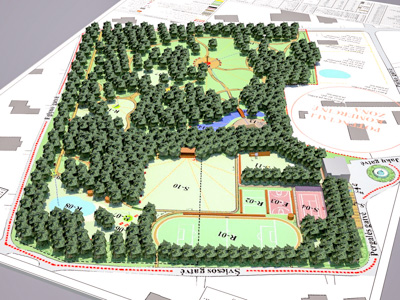
- I completed six years of studies in Town and Country Planning and Landscape Architecture at Klaipėda University, earning a Master’s degree in 2010.
- Between 2007 and 2012, I worked in urban and regional planning, as well as in several landscape architecture projects.
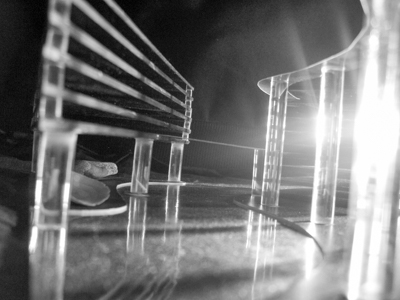
- During my stay in Copenhagen from 2012, I collaborated on experimental bicycle infrastructure initiatives, including modular and assemblable path systems, and wrote articles on the concept of a livable city inspired by Copenhagen’s urban model.
- Since 2017, I have been developing and constructing my own project — the Farm of Arts near Klaipėda — a space combining architecture, landscape, and interdisciplinary art. I continue to follow and engage with contemporary developments in architecture and urban planning.